Quick Answer: Sourcing auto suspension parts from China in 2026 offers cost savings of 30-50% compared to European and Japanese suppliers, with leading manufacturers like HC Auto Parts providing IATF 16949-certified engine mounts, strut mounts, control arms, and center bearings at OEM-quality standards. This guide covers supplier verification, quality standards, product deep-dives, and common sourcing mistakes to help you build a reliable supply chain.

Why This Guide Matters in 2026
The global automotive aftermarket is valued at over $400 billion in 2026, with suspension parts representing one of the fastest-growing segments. As vehicle ages increase worldwide and the average age of cars on the road reaches 12.5 years in the US and Europe, demand for replacement suspension components — engine mounts, strut mounts, control arms, bushings, and center bearings — continues to surge.
China has emerged as the world’s manufacturing hub for these components, producing an estimated 68% of global aftermarket suspension parts by volume. For importers, distributors, and auto repair chains, sourcing from China is no longer just about cost savings — it is about accessing a mature industrial ecosystem with world-class quality systems, advanced rubber-metal bonding technology, and vertically integrated supply chains.
This comprehensive 2026 guide draws on industry data from China Association of Automobile Manufacturers (CAAM), IHS Markit, and interviews with sourcing professionals to give you an actionable framework for evaluating and working with Chinese suspension parts manufacturers.
Understanding Auto Suspension Parts
Before diving into sourcing strategy, it is essential to understand the products themselves. The suspension system is a complex network of components that connect a vehicle to its wheels, absorbing shocks, maintaining tire contact, and ensuring stable handling. The following are the core product categories you will encounter when sourcing from China.
Engine Mount (Engine Mounting)
An engine mount (also called a motor mount) is a critical component that secures the engine to the vehicle chassis while isolating vibration and noise from entering the cabin. A typical engine mount consists of a metal bracket (stamped steel or aluminum), a rubber bushing (natural rubber or EPDM), and a hydraulic chamber in premium versions.
Key OEM specifications: Engine mounts must withstand operating temperatures from -40°C to +120°C, resist oil and coolant contamination, and maintain durometer hardness within ±5 Shore A of design specs. Top Chinese manufacturers like HC Auto Parts produce both hydraulic and rubber engine mounts for Toyota, Honda, Nissan, BMW, and 16 other brands, with 1000+ OEM-equivalent part numbers in stock.
| Material | Durability (km) | Vibration Isolation | Cost Rating |
|---|---|---|---|
| Natural Rubber | 80,000-160,000 | Superior | Medium-High |
| Synthetic Rubber (EPDM) | 100,000-180,000 | Good | Medium |
| Polyurethane | 150,000-200,000 | Moderate | High |
Strut Mount (Suspension Mount)
A strut mount connects the suspension strut (shock absorber) to the vehicle body, enabling steering rotation while isolating road noise and vibration. It is one of the most frequently replaced suspension components, with an average service life of 80,000-150,000 km depending on road conditions.
Chinese strut mount manufacturers have made significant advances in bearing quality — the core failure point of most strut mounts. HC Auto Parts uses Japanese-made bearing steel (SUJ2) with precision CNC-machined bearing races, achieving runout tolerance within 0.05mm, matching OEM specifications for Toyota, Honda, Hyundai, and Volkswagen applications.
Control Arm & Bushing
The control arm (wishbone) connects the steering knuckle to the vehicle frame, while control arm bushings provide the flexible pivot points. Together, they determine wheel alignment stability, ride comfort, and steering precision.
When sourcing control arms from China, the key quality differentiators are: (1) material grade — forged steel (SAE 1045/4140) vs. stamped sheet metal; (2) bushing rubber compound — natural rubber with anti-aging additives vs. recycled rubber; and (3) ball joint integration — whether the ball joint is replaceable or permanently pressed. HC Auto Parts offers both replaceable-ball-joint and press-in designs across 18+ vehicle brands.
Center Bearing (Drive Shaft Support Bearing)
Center bearings support the midsection of two-piece drive shafts in rear-wheel-drive and four-wheel-drive vehicles. They consist of a deep-groove ball bearing housed in a rubber-met al bracket that isolates drivetrain vibration.
Heavy-duty center bearings for trucks and commercial vehicles require high-temperature grease (NLGI #2, -40°C to +150°C operating range) and reinforced rubber housings. HC Auto Parts supplies center bearings for Toyota Hilux, Hino trucks, Dodge Ram, and 13 other brands, with 100% dynamic balance testing before shipment.

Why China Leads Global Suspension Parts Manufacturing in 2026
Several structural advantages make China the preferred sourcing destination for automotive suspension parts in 2026:
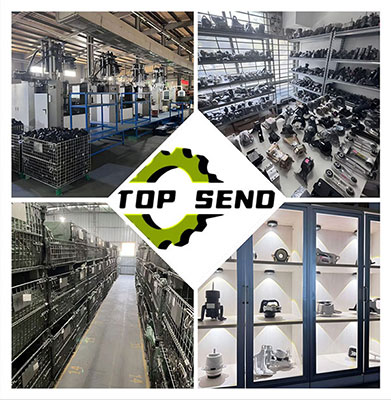
1. Vertical Integration: Leading Chinese manufacturers operate vertically integrated facilities that handle everything from rubber compounding to metal stamping, CNC machining, and final assembly under one roof. This reduces lead times to 15-30 days (vs. 60-90 days for European suppliers) and eliminates quality control gaps between outsourced processes.
2. Rubber Compounding Expertise: China’s synthetic rubber industry (led by Sinopec, CNPC, and TSRC) supplies world-class EPDM and NBR rubber compounds at 30-40% lower cost than equivalent Japanese or European materials. Top-tier suspension parts factories maintain in-house rubber labs for compound formulation and batch testing.
3. IATF 16949 Certification: As of 2026, over 3,200 Chinese automotive parts manufacturers hold IATF 16949 certification (the automotive-specific quality management standard), up from fewer than 800 in 2015. This means the quality systems gap between Chinese suppliers and their German/Japanese counterparts has largely closed.
4. Export Infrastructure: China’s dedicated automotive export zones in Wenzhou (Zhejiang), Guangzhou (Guangdong), and Qingdao (Shandong) provide streamlined logistics, with daily consolidated shipping to major ports worldwide. HC Auto Parts, based in Wenzhou — China’s automotive parts capital — ships to 80+ countries via DHL, FedEx, and sea freight.
5. Cost Advantage: The same engine mount that retails for $85-120 from a European OEM supplier can be sourced directly from a certified Chinese manufacturer at $28-45, representing a 40-55% cost saving. For distributors and importers, this margin expansion is transformative for competitiveness in local markets.

How to Identify a Quality Suspension Parts Manufacturer
Not all Chinese manufacturers are equal. The gap between a tier-1 supplier (like HC Auto Parts) and a low-end trading company can be the difference between zero returns and 15% defect rates. Here is a practical verification framework:
Certification Checklist
Ask for and verify the following certifications (don’t just accept scanned copies — check the certification body’s online database):
- IATF 16949:2016 — The gold standard for automotive quality management. Covers process control, risk management, and continuous improvement. Verify at iatfglobaloverence.org.
- ISO 9001:2015 — General quality management. Important but less stringent than IATF 16949.
- SAE J1202 / ASTM D2000 — Rubber material specifications. Ensures rubber compounds meet OEM-standard durability and temperature resistance.
- CE Marking — Required for European market access. Indicates compliance with EU safety and environmental directives.
Factory Audit Essentials
Before placing a volume order, conduct (or hire a third-party to conduct) a factory audit. Key focus areas:
- Rubber Compounding Lab: Is there an in-house lab for rubber formulation and testing? If the factory buys pre-compounded rubber without testing, quality consistency is at risk.
- Metal Stamping/CNC Capability: Are metal brackets produced in-house or outsourced? In-house metal processing enables better dimensional control.
- 100% Inspection: Does the factory perform 100% functional testing (noise, vibration, leak test for hydraulic mounts)?
- OE Equivalent Tooling: Do they use OE-spec injection molds and pressing dies? Poor tooling is the #1 cause of fitment complaints.
Sample Testing Protocol
Order 5-10 samples of each part number before committing to production. Test protocol:
- Dimensional Check: Verify all mounting hole positions and bushing inner diameters against OEM drawings (tolerance: ±0.5mm).
- Rubber Hardness: Measure Shore A durometer — should match OEM spec within ±5 points.
- Noise Test: Install in a test vehicle and check for abnormal noise (squeak, clunk) over speed bumps and rough pavement.
- 60-Day Real-World Test: Install in a high-mileage vehicle and inspect after 3,000-5,000 km for rubber cracking or metal bracket corrosion.
Deep Dive: Engine Mount Sourcing Guide
Engine mounts are among the highest-volume replacement parts in the suspension category. When sourcing engine mounts from China, pay attention to these product-specific details:
Hydraulic vs. Solid Rubber: Hydraulic engine mounts contain a fluid chamber that provides variable damping — soft for idle vibration isolation, firm for acceleration torque resistance. They cost 40-60% more to manufacture but deliver noticeably better NVH (Noise, Vibration, Harshness) performance. For aftermarket customers willing to pay a premium, hydraulic mounts are the preferred choice for Toyota Camry, Honda Accord, and BMW 3-series applications.
OE Number Cross-Reference: Always verify that the supplier’s OE cross-reference list is accurate. Common practice among low-end suppliers is to claim coverage for part numbers they cannot actually produce to spec. Request sample photos of the actual part next to the OE reference part before ordering.
Packaging for Export: Engine mounts are heavy and prone to deformation if stacked improperly. Verify that the supplier uses individual box packaging with internal bracing for long-distance export. HC Auto Parts uses custom-fitted cardboard boxes with 5-layer corrugated reinforcement for all export orders.
Related: Read our detailed buyer’s guide: How to Choose Quality Engine Mounts: A Buyer’s Guide — covers OE number lookup, rubber compound selection, and warranty claim handling.
Deep Dive: Strut Mount Selection Guide
Strut mounts have a higher rotational speed requirement than engine mounts (they rotate with the steering wheel), making bearing quality the critical differentiator. When evaluating strut mount suppliers:
- Bearing Type: Premium strut mounts use single-row deep groove ball bearings with rubber seals (contact seal or non-contact seal). Avoid suppliers using unbranded, uncertified bearings.
- Grease Type: Lithium-complex grease with NLGI #2 consistency is the industry standard. Some low-end suppliers use cheaper sodium-based grease that washing out in wet conditions.
- Stamping Thickness: The metal mounting plate should be at least 2.5mm thick for passenger cars, 4.0mm+ for SUVs and light trucks. Verify with calipers on samples.
Related: How to Choose the Right Strut Mount: Complete Buyer’s Guide — includes torque specifications, bearing preload adjustment, and installation tips.

Common Sourcing Mistakes to Avoid
Even experienced importers make these mistakes when sourcing suspension parts from China:
Mistake #1: Choosing Based on Price Alone
The cheapest quotation almost always indicates cost-cutting in rubber compound quality, bearing grade, or metal thickness. A $12 engine mount that fails at 30,000 km costs far more in reputation damage and return shipping than the $2-3 savings per unit. Always evaluate based on total cost of ownership, not unit price.
Mistake #2: Skipping the Factory Audit
Trading companies often present themselves as manufacturers. Without a factory audit, you may be buying from a trading company that outsources to the lowest-bid factory with no quality oversight. Request a live video factory tour (not pre-recorded) via WeChat or WhatsApp before ordering.
Mistake #3: Ignoring Packaging Specifications
Suspension parts are heavy and dense. Poor packaging leads to deformation during 30-45 day ocean shipping. Specify: individually boxed, 5-layer corrugated cardboard, maximum 15kg per carton. Also require palletizing for orders over 500kg.
Mistake #4: Not Negotiating Mold Ownership
If you commission custom tooling (for private label or exclusive SKUs), explicitly contract that the molds remain your property and will not be used for other customers. Some factories quietly use customer-funded molds to produce for competitors.
Mistake #5: Overlooking After-Sales Support
Warranty claim handling is where most sourcing relationships break down. Before ordering, agree in writing: warranty period (minimum 12 months), claim process (photo evidence requirements), and remedy (replacement parts in next order vs. cash refund). HC Auto Parts provides a 24-month warranty on all engine mounts and strut mounts, with a streamlined photo-based claim process.
Quality Verification Checklist (Printable)
Use this checklist when evaluating a new Chinese suspension parts supplier:
| Check Item | Pass Criteria | Weight |
|---|---|---|
| IATF 16949 cert valid? | Yes, verified online | ★ ★ ★ |
| In-house rubber lab? | Yes, with test reports | ★ ★ ★ |
| 100% inspection before shipment? | Yes, with record | ★ ★ ★ |
| Sample dimensions match OE drawing? | ±0.5mm tolerance | ★ ★ ★ |
| Rubber hardness (Shore A) matches spec? | ±5 points | ★ ★ |
| Export packaging reinforced? | 5-layer + individual box | ★ ★ |
| Warranty ≥ 12 months? | Yes, in writing | ★ ★ |
| Reference customers in your market? | ≥ 2 verifiable | ★ |
2026 Market Trends: What Buyers Need to Know
Several trends are reshaping the Chinese auto parts export landscape in 2026:
- EV-Specific Suspension Parts: Electric vehicles have 20-30% higher curb weight than ICE vehicles, requiring upgraded engine mounts (for EV powertrain units) and reinforced control arm bushings. Suppliers with EV-specific product lines are gaining market share rapidly.
- Chinese Car Brand Expansion: Brands like BYD, Geely, Chery, and Great Wall are expanding into Europe, Southeast Asia, and Latin America — creating new parts demand for these brands in overseas markets. HC Auto Parts has dedicated Chinese car parts categories covering BYD, Geely, Chery, Changan, and Great Wall models.
- Consolidation Among Suppliers: The top 20% of Chinese auto parts exporters now account for 70% of export volume. Buying from established tier-1 suppliers reduces supply chain risk compared to smaller, less capitalized factories.
- Digital Quality Traceability: Leading suppliers now provide QR-code-based traceability — scan the part label to see production date, batch number, test results, and warranty status. This is becoming a differentiating feature for premium distributors.
Frequently Asked Questions
Q1: How much can I save by sourcing suspension parts from China vs. local distributors?
A: Typical savings are 35-55% compared to buying from local distributors in the US, Europe, or Australia. For example, a Toyota Camry engine mount that retails for $95 from a local parts store can be sourced direct from a certified Chinese manufacturer at $32-42 (FOB price), leaving ample margin for import duties, shipping, and distributor markup.
Q2: What is the minimum order quantity (MOQ) for custom suspension parts?
A: For existing tooling, most Chinese manufacturers (including HC Auto Parts) have no MOQ requirement — you can order a single piece. For custom or private-label parts requiring new tooling, typical MOQ is 300-500 pieces per part number to amortize tooling costs.
Q3: How do I verify that the parts will fit my target vehicle models?
A: Request the supplier’s OE cross-reference list and verify 5-10 part numbers against your local parts catalog or OEM parts website. Also request sample photos of the part installed on an actual vehicle. Reputable suppliers will provide fitment guarantees and accept returns for fitment issues.
Q4: What shipping options are available for small and large orders?
A: For orders under 100kg: DHL, FedEx, or UPS (5-7 days, door-to-door). For orders over 300kg: sea freight (25-40 days, port-to-port or door-to-door). HC Auto Parts has consolidated shipping partnerships that reduce per-kg costs by 30-40% compared to retail courier rates.
Q5: Are Chinese suspension parts covered by insurance for international shipping?
A: Yes — always request “All Risk” insurance coverage (not just “Free of Particular Average”). The cost is typically 0.3-0.5% of shipment value. HC Auto Parts includes insurance in all EXW and FOB shipments upon request.
Q6: How long does it take to receive customized private-label packaging?
A: Custom packaging design and production typically adds 10-15 days to the production timeline. If you provide approved artwork, the factory can produce custom boxes, labels, and instructions in parallel with part production to avoid delays.
Q7: What warranty do Chinese suspension parts typically carry?
A: Industry standard is 12 months / 20,000 km, whichever comes first. Tier-1 suppliers like HC Auto Parts offer 24-month / 50,000 km warranty on premium product lines (hydraulic engine mounts, heavy-duty center bearings). Always get warranty terms in writing on the proforma invoice.
Q8: Can I get exclusive distribution rights for my country/region?
A: Yes — most Chinese manufacturers are open to exclusive distribution agreements for specific countries or product lines, typically requiring a minimum annual purchase commitment (e.g., $50,000-200,000 depending on market size). HC Auto Parts has exclusive distributors in 15+ countries and provides marketing support, technical training, and priority production allocation.
Conclusion: Building a Reliable Supply Chain in 2026
Sourcing auto suspension parts from China in 2026 is a mature, well-understood process — but success depends on supplier selection, quality verification, and clear communication of your requirements. The cost advantages are real (30-50% savings), but only when paired with rigorous quality control.
Next Steps: Request a catalog and price list from 3-5 certified manufacturers. Order samples from each. Conduct side-by-side comparison (rubber hardness, fitment accuracy, packaging quality). Negotiate terms with your top choice. Start with a trial order of 50-100 pieces before scaling to container quantities.
HC Auto Parts is a Wenzhou-based manufacturer with 14+ years of experience, IATF 16949 certification, and 7,000+ suspension part models covering 19+ vehicle brands. We support small MOQs, offer 24-month warranty on premium lines, and ship to 80+ countries. Contact our team to request a catalog, discuss exclusive distribution, or get a quotation for your target part numbers.
Ready to Source Quality Suspension Parts from China?
WhatsApp: +86 180 2088 8969 | Email: [email protected]